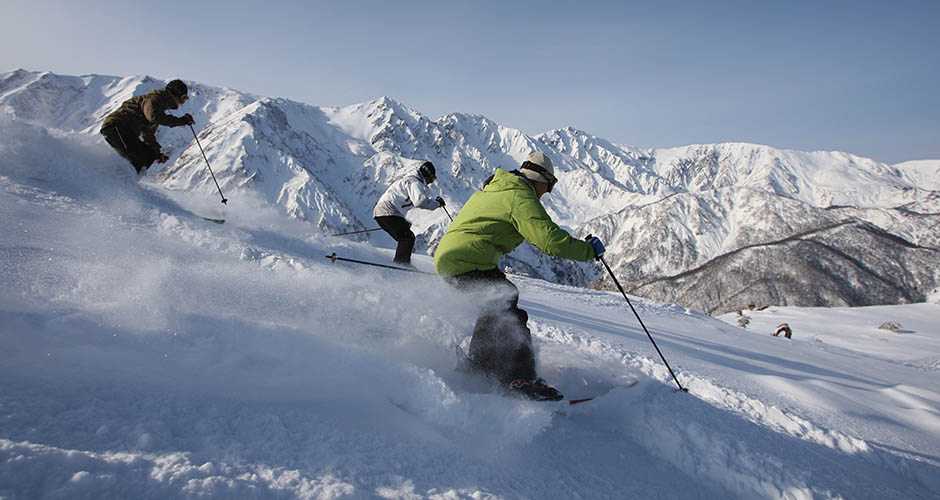
 Fresh snow at Happo One. Photo: Happo One
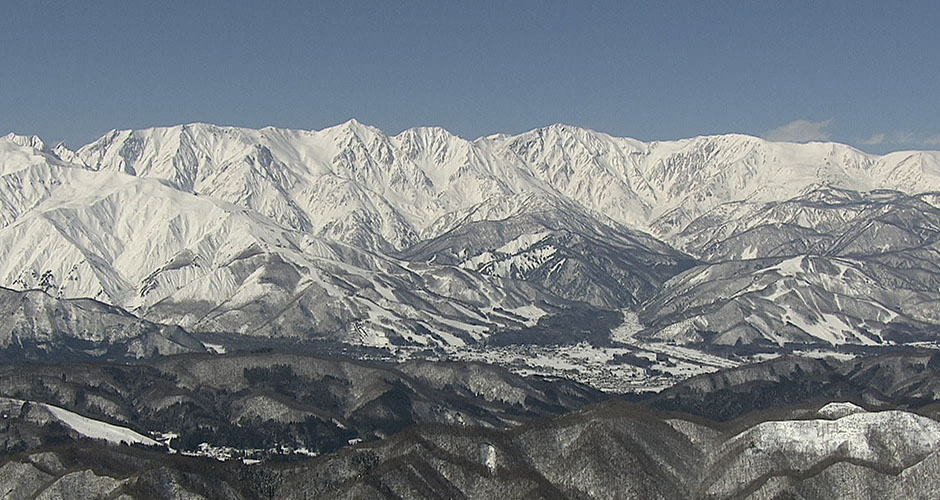 The Hakuba Valley showing Happo One on the left and Iwatake on the right.
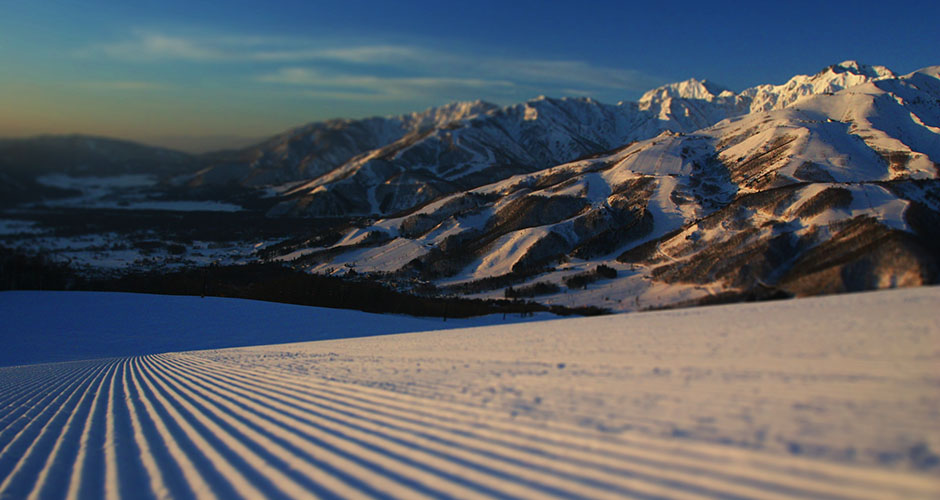 Fresh corduroy groomers at Happo One Ski Resort. Photo: Happo One
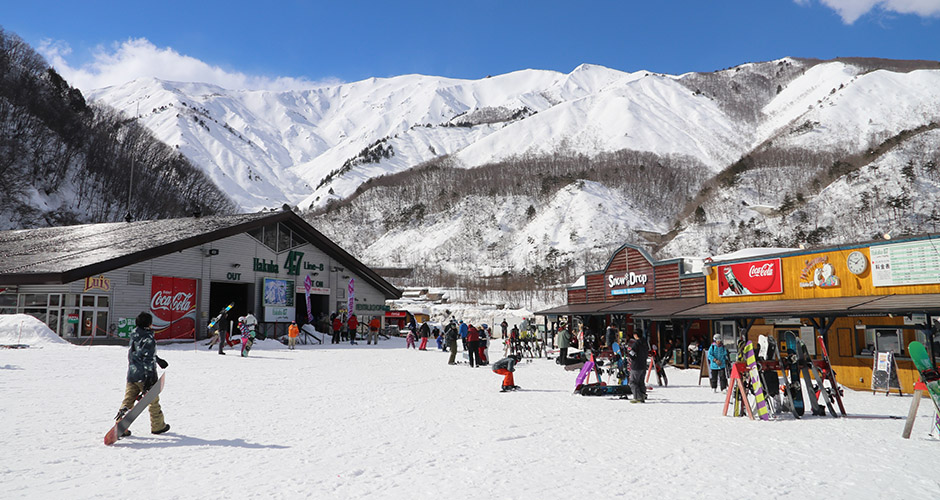 The base area of Hakuba 47. Photo: Scout
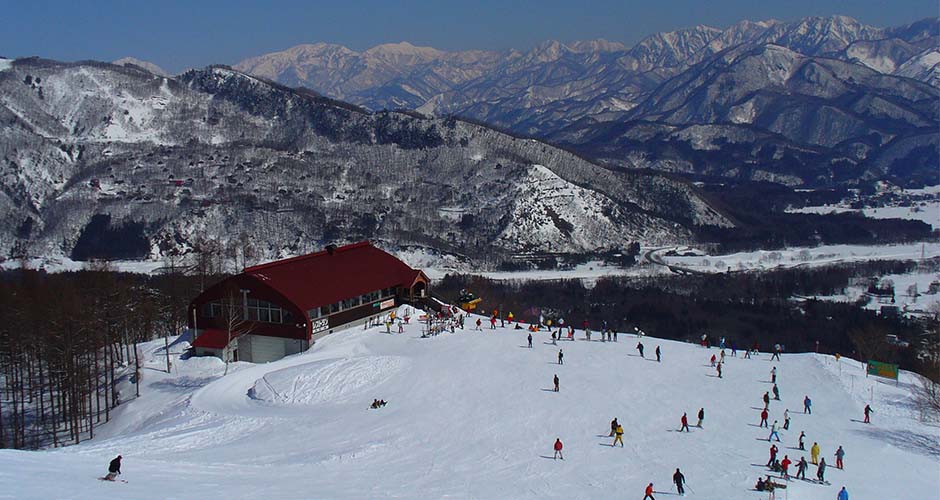 Happo One Ski Resort. PhotoL Happo One
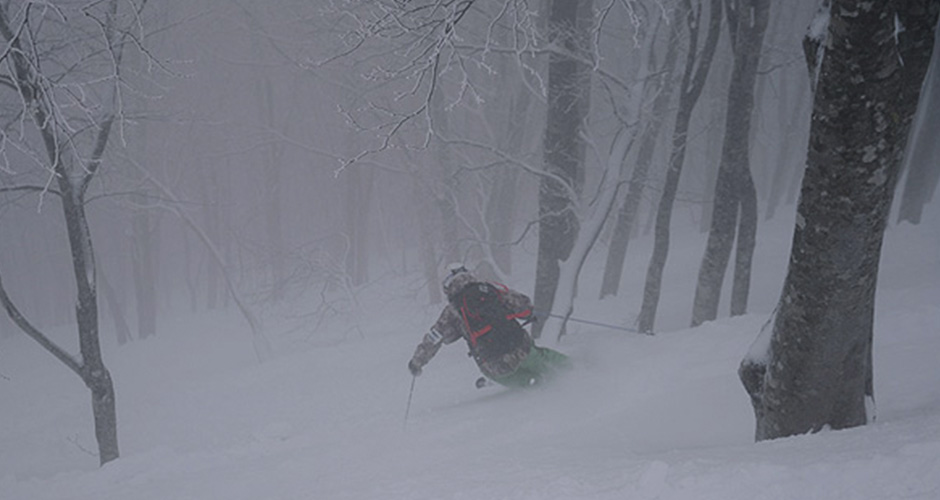 Skiing through the trees is allowed at Hakuba Cortina. Photo: Cortina Ski Resort.
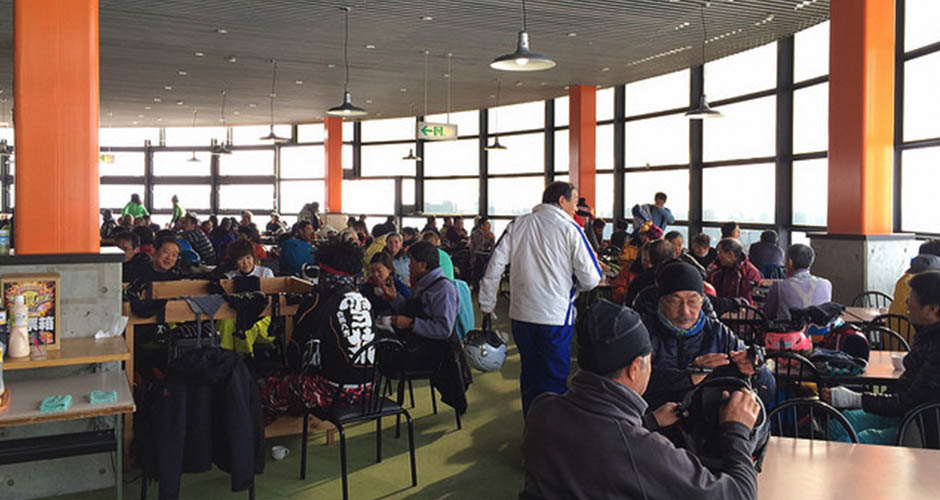 A classic on-mountain restaurant at Happo One. Photo: Happo One ski resort.
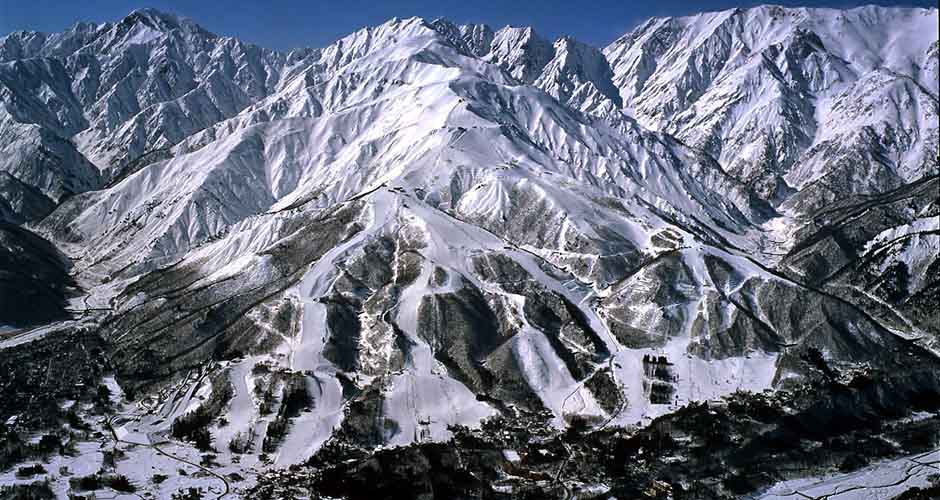 Aerial view of Happo One ski resort. Photo: Happo One.
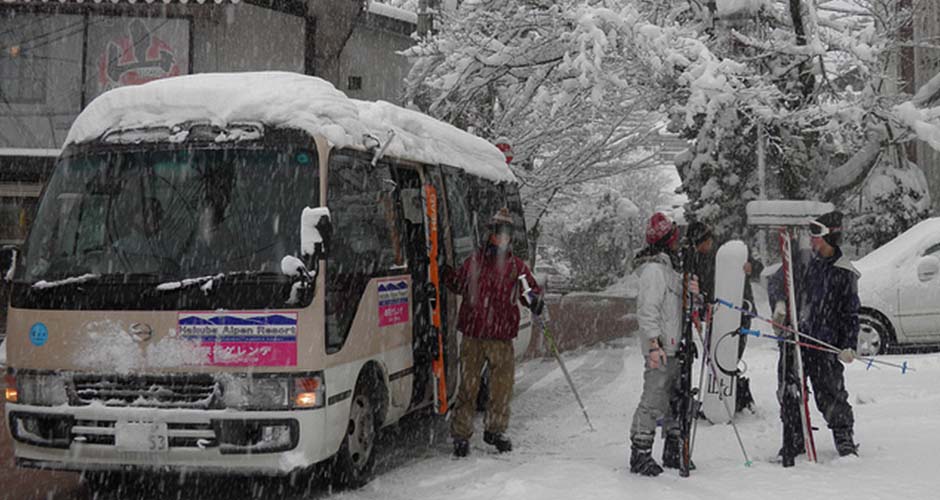 Shuttle buses are widely used for getting to the resorts. Photo: Happo One ski resort.
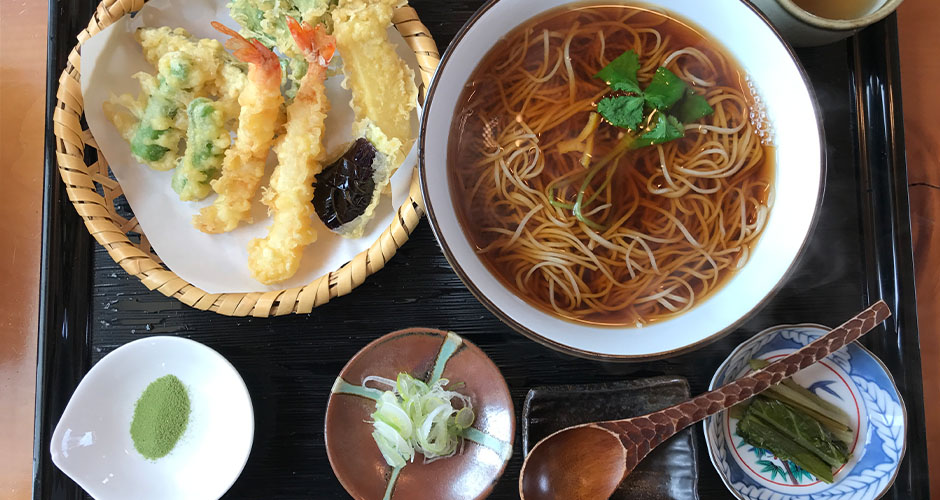 Hakuba has some amazing Soba noodle restaurants. Photo: Scout
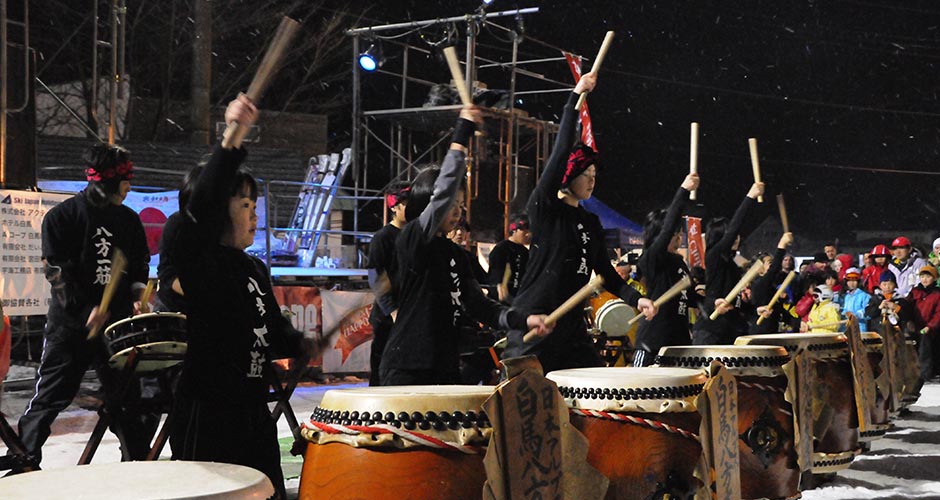 Taiko drummers. Photo: Happo One
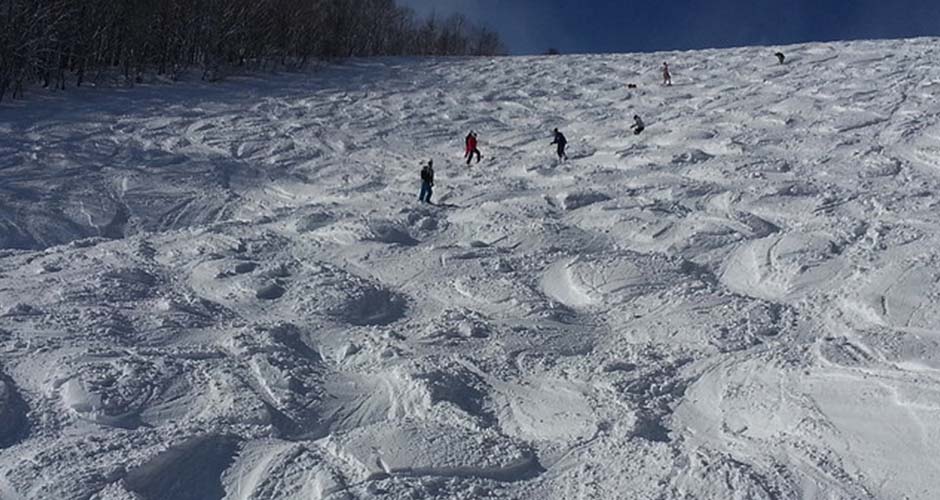 Mogul paradise in Happo One. Photo: Happo One
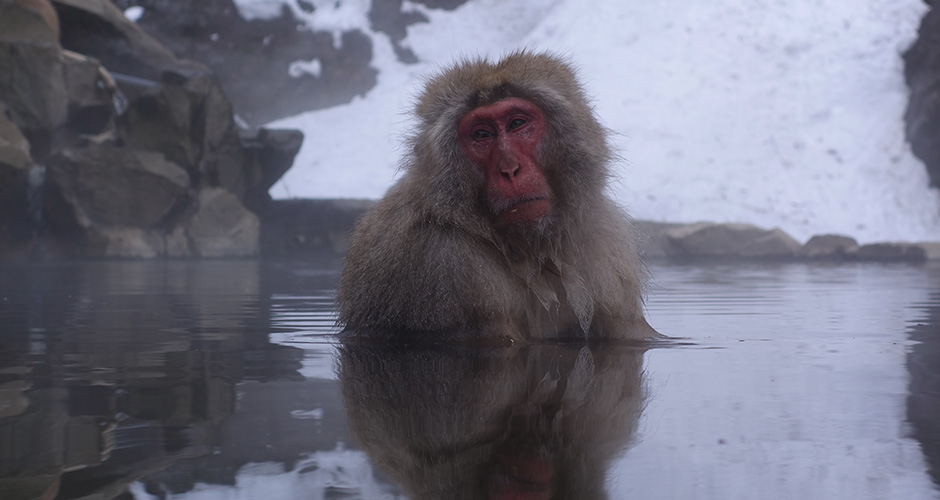 A visit to the Snow Monkeys is a popular day trip. Photo: Scout
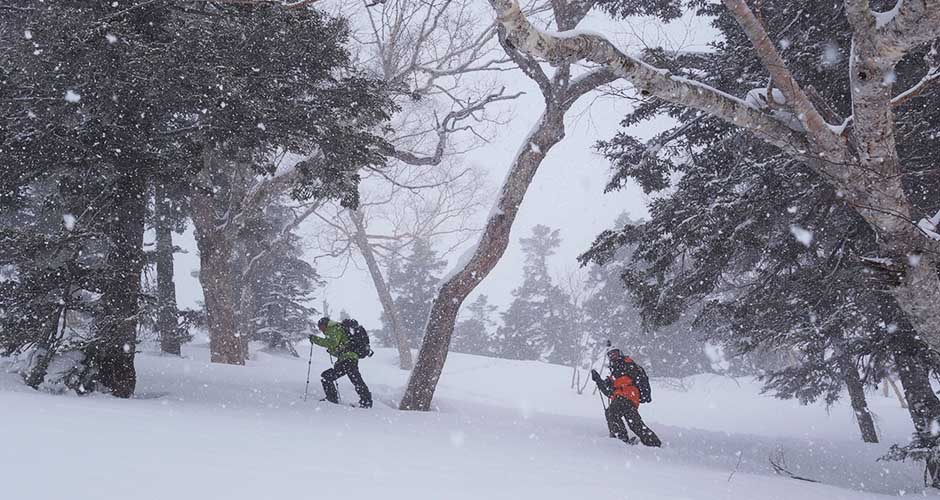 Backcountry skiing is great in the Hakuba Valley. Photo: Scout
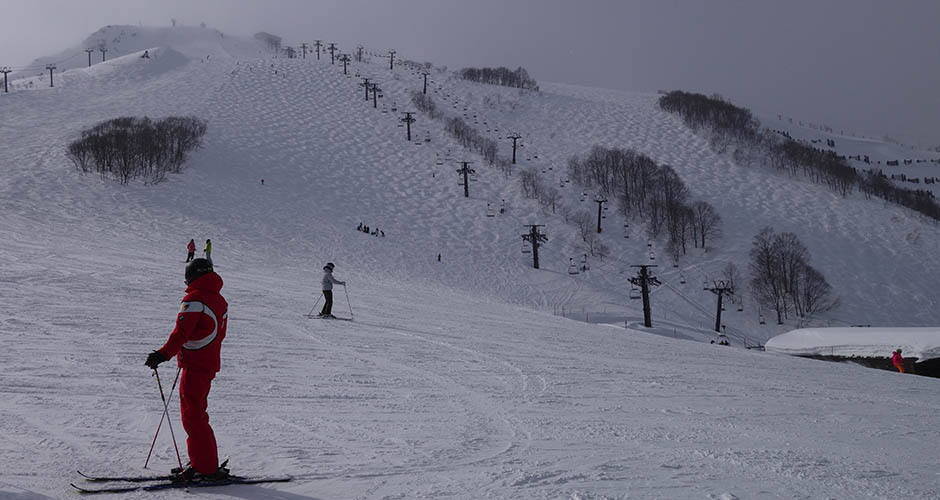 Happo One Ski Resort. Photo: Happo One
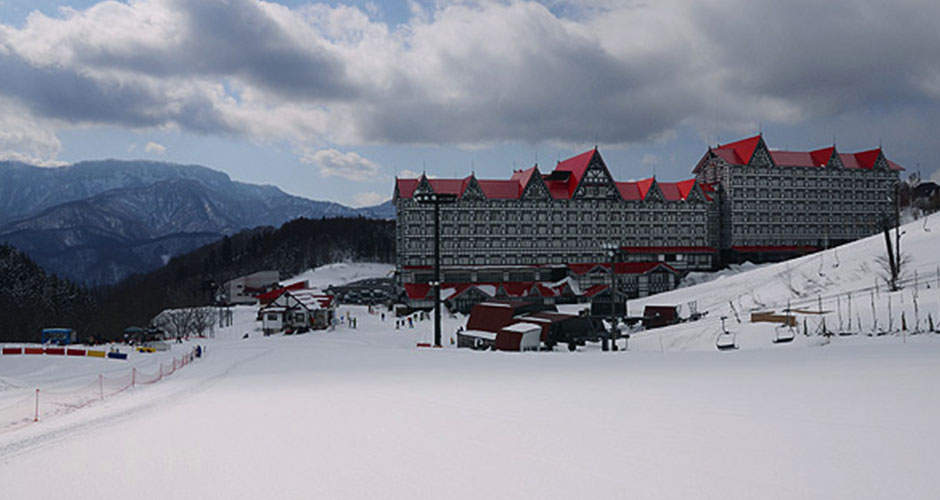 The large hotel at Cortina Ski Resort. Photo: Cortina Ski Resort
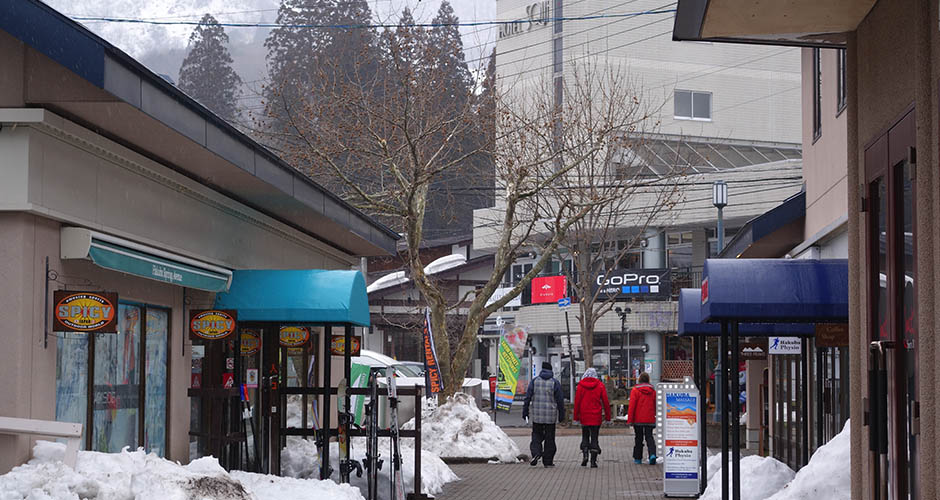 Happo One Village. Photo: Scout
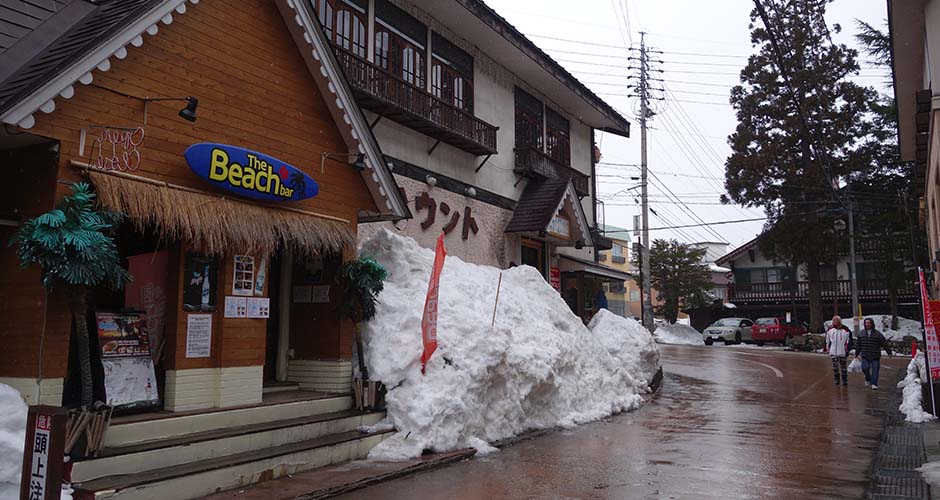 Happo One village has many great restaurants and bars. Photo: Scout
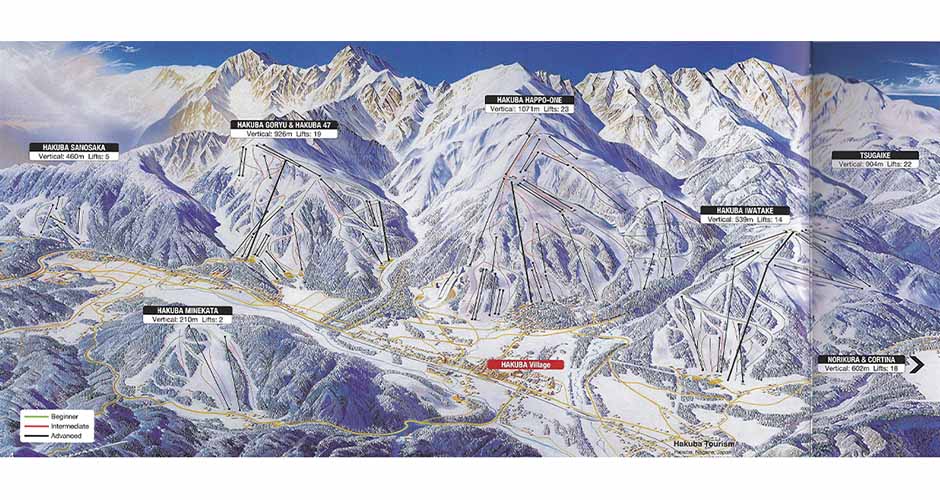 Map of the Hakuba Valley.
With 10 ski resorts in one valley, Hakuba is one of Japan’s most popular ski destinations for Westerners.
HAKUBA SCOUT REVIEW
The Hakuba Valley is situated in the breathtakingly beautiful Northern Japan Alps, not far from Nagano. It rose to the forefront of the international ski scene thanks to its starring role during the 1998 Nagano Winter Olympics – many of the skiing events were held here. Today it is one of the most popular destinations for skiers heading to Japan.
Apart from the scenery, it’s easy to see why people love this place. First of all, there are the 10 ski resorts that are dotted through the valley. These provide a variety of experiences – such as the boarder and terrain park heaven of Hakuba 47, or the powder stashes and tree skiing at Cortina. There really is something for everyone. Happo-one, the valley’s flagship resort, is the most central – and it’s usually the first port-of-call for skiers who are new to the area. Meanwhile, apres activity is spread out throughout the valley, with several ‘hamlets’ providing some great dining, drinking and accommodation options. Happo One (pronounced Happo Oh-Nay) is the most developed village with the largest selection of restaurants and vibrant night life. The nearby Wadano area is great for those that want to be close, but not in the midle of Happo One. Echoland is another village with a growing village scene, though it’s quite separated from Happo One and not within walking distance of any lifts. Hakuba village (Hakuba-Cho) doesn’t have a lot of accommodation options for westerners, though it does have a few good restaurants.
The areas people tend to stick to are Happo, Wadano and Echoland. Most parts of Happo and Wadano are within walking distance of the Happo-one base areas. Echoland is separate from any ski area, and has a cute main street lined with bars, restaurants and shops.
Due to the variety of resorts and the spread of hamlets, Hakuba does not seem to have an overarching sense of identity and place (like Nozawa village or Niseko Hirafu village). It’s not easy to ski more than one resort in a day, and it’s not possible to wander between the hamlets. As a result you are often left wondering what might be happening in another part of town. But this is a only a niggling complaint – overall there’s so much to love about Hakuba that you tend to overlook any downsides.
All-in-all Hakuba is a great destination for a ski holiday because it’s relatively easy to get to, it caters to non-Japanese speakers, and there’s an abundance of great skiing. Plus, there are a ton of extra activities to keep you busy well into the night – if that takes your fancy.
SCOUT LOVES
- The fantastic scenery with steep mountains that look like they’re straight out of Europe.
- The terrain is great for backcountry skiing.
- You are able to ski a variety of ski resorts using one pass.
- There are small pockets of accommodation scattered around the valley.
- There are plenty of accommodation options within walking distance of the slopes.
- You’ve got a choice of two ski schools with English speaking instructors.
SCOUT TIPS
- Sadly, the resorts aren’t linked by lifts. But there’s a fairly efficient bus system to move you between resorts.
- Off-piste tree skiing is mostly not allowed at any of the resorts except for Cortina.
- This area is now well and truly Westernized and caters well to English speakers. Hakuba is not a truly authentic Japanese experience, but it’s certainly an easy one.
- Some areas have become real party zones.
- It’s easy to combine a week in Hakuba together with some time in one of the other Nagano area ski resorts, such as Nozawa Onsen.
HAKUBA SKIING
Hakuba is renowned for having some of the steepest (by Japanese standards at least) terrain in the country, and fortunately it also receives plenty of powder. With an average of 11 meters of snow each year, conditions are usually reliable through most of the season. And, like a gift from the gods, Hakuba also boasts more blue sky days than any other Japanese resort.
The main dream of anyone who has ever skied, worked or lived here is that one day at least some of the individual resorts will connect to create one giant ski resort. This isn’t as farfetched as it might sound – some of the resorts share common ridgelines or are separated by a river. But for now, the tendency is to stick to one resort per day (using public transport to get there). The upside of having a collection of individual resorts is that each one is a little different from the next – so you’ll be treated to a variety of experiences.
In total, the area’s 10 resorts boast 135 lifts and over 200 runs. Each of them are quite small so intermediate and above skiers will want to ski a variety of them over the course of a week to avoid the monotony of one small resort every day. Therefore when working out where to stay take into consideration that you will likely be commuting to other resorts, even if staying at the base of Happo One. The largest and most popular resorts are Happo-one, Hakuba 47, Goryu and Cortina. The terrain at each is varied, and suited to beginners through to intermediates.
If you’re an advanced skier, you’ll be able to find steep groomed runs at most of these resorts, but the off-piste, inbound tree skiing is limited to Cortina, though expanding a little at other resorts each season. As such, the advanced skiers flock to Cortina on powder days, which means it does get tracked out fairly quickly.
Meanwhile, if you’re yearning for some good powder skiing in the trees, the best way to get it is to hire a guide and head into the backcountry. There’s a wide variety of terrain to choose from and it’s a great place to try out backcountry for the first time. Evergreen Backcountry Guides is our go-to for fully guided BC and off-piste in Hakuba. Check out the tour descriptions here. Scout can book guides or group tours as part of any Hakuba ski package.
If you’re into moguls, you’re in luck because the Japanese love them and many slopes have perfectly formed, large, round bumps that the locals seem to fly over – leaving the rest of us to attempt before our backs and knees start to give in.
There are some good terrain park facilities at most of the resorts.
HAKUBA FOR FAMILIES
There are many reasons why Hakuba is a great option for families. For one, there are several accommodation options that are within walking distance of Happo-one’s four ski schools (with English instructors and some with child care). If this sounds perfect to you, look for accommodation close to the Nakiyama Base area (Happo Village), the Kokusai lift (Lower Wadano), or the Snow Plaza Sakka (Upper Wadano). Snow Plaza Sakka also has a day care facility. Scout can book lessons with Evergreen as partof your Hakuba Ski Package. Evergreen runs a shuttle stopping throughout Happo and Wadano making it easy to get your kids to and from ski school.
And while the resort and village areas are well and truly Westernized (thereby making it easy for you) there are still some Japanese experiences to be had. Although we will point out that there’s only so much culture you can absorb at a samurai sword show or a Japanese tea ceremony when you’re sitting in a room full of Australians.
Further details about ski schools, babysitting, and activities for kids can be found in our Hakuba Scout Field Guide which is complimentary for Scout guests.
HAKUBA ACCOMMODATION
The Hakuba area has a wide variety of Western-style accommodation options, including plenty of self-catered apartments in Hakuba Valley. However there are also a few Japanese-style hotels, pensions and ryokans that will provide you with a more authentic experience. While there are a lot of really nice places to stay around here, there area lacks a modern 5 star hotel… (so far).
Given the proliferation of developments by Westerners, the accommodation doesn’t book out as quickly as smaller resorts, but if you want your first choice, you’ll still need to get in early (by March/April for the following season). We know of some places that get booked out a year in advance for January and February. Let Scout help you find the perfect place and our Hakuba Ski Packages are a great way of getting the best value.
Generally, the best accommodation options in the Hakuba Valley are located in four areas:
Happo Village: These are in the village of Happo, within close walking distance of the Happo Nakiyama base area. There are also a lot of great bars and restaurants to choose from. Happo Village is suited to young couples or groups of friends who want to be in the thick of the action.
Lower Wadano: Here you’ll find a cluster of nice hotels and apartment complexes. It is possible to walk about 5-15 minutes (depending on the hotel) to the Happo-one Kokusai base area via a fairly busy road and across a bridge. There are also a few dining options and bars, plus a ski rental shop. The Happo village area is also within walking distance – about 10-15 minutes down a hill.
Upper Wadano: One of the more recently developed areas in Hakuba, this is a 15 minute walk up the road from Lower Wadano. (Although be aware that at night, this walk can seem very long and dark). The restaurant and bar options are pretty limited, but it’s peaceful and the Happo Sakka base area is an easy walk from most hotels and houses.
Echoland: While quite separated from the action in Happo, and not within walking distance of any lifts, this small hamlet has a compact main street with a handful of restaurants and bars. It is home to a lot of larger houses to rent, and a few western style ski lodges. Generally speaking you would want to have your own car if staying in this area.
RESORT ACTIVITIES
Hakuba has a wide variety of activities to keep kids and adults entertained off the snow – from making sushi, to firing a semi-automatic weapon, to visiting a historic Japanese temple – the possibilities are virtually endless. All of this is on top of the more classic ski resort activities such as snowmobiling and snowshoeing.
Many (actually most) of the ‘cultural’ activities cater entirely to Westerners, but what they might lack in authenticity they make up for in fun.
Even though it might eat into your skiing time, we highly recommend the Snow Monkey tour. Here you’ll see cute monkeys soaking themselves in hot springs – a sight to behold! The tour we did also included a visit to the beautiful Zenkoji temple, as well as a fabulous lunch in a traditional Japanese town. Scout can help organise a snow monkey and Zenkoji tour as part of your Hakuba Ski Package.
And don’t forget to have a soak in a natural hot spring onsen… your ski muscles will thank you.
Additional activity details, including contact details and prices, can be found in our Hakuba Scout Field Guide, given free to Scout guests.
GETTING THERE AND AROUND
It’s relatively easy to get to Hakuba and there are several different ways of getting here – it just takes a bit of time. If you want to come directly from Tokyo's Narita airport, the easiest ways are via private transfer, semi-private shuttle bus, or the daily scheduled busses (if your timings work out). Those trips take 5-6 hours.
Alternatively, you can come via train and bus, with the option of taking the super fast and super fun Shinkansen from Tokyo to Nagano. It does require a few different changes of transport, but it is ultimately a bit quicker.
To get around Hakuba (and between the ski resorts and hamlets), you can walk, catch a taxi or a shuttle bus. Fortunately, the ski shuttle busses are plentiful and easy to negotiate. For later in the evening, there’s a nighttime bus called ‘Genki-Go’ that runs until 11pm. There are also taxis, which restaurants are happy to call for you. Given how easy it is to get around on public transport, we don’t recommend renting a car unless you are quite experienced at driving in difficult snow conditions and you are wanting a great deal of flexibility.
As part of a Hakuba Package Deal Scout can help organise tranfsers from the airport or between resorts.
WHEN TO GO
The Hakuba ski resorts are all usually open for skiing by December (although coverage in early December can be risky). January and February are great months when it’s cold, and the powder is (usually) plentiful. March is still pretty good for coverage, but with smaller crowds. The ski fields usually stay open until early May.
Due to their proximity to Nagano and other urban areas, the resorts can be crowded on weekends. Hakuba gets extremely busy during New Year, early January and Chinese New Year, and books out early, so it's wise to contact us at least 6 months in advance if you wish to travel at this time.
Holidays & Festivals:
Omachi Snow Festival: Every Saturday in February. The Omachi-go bus takes visitors to Omachi every Saturday in February to see the Taiko drums, fireworks, and igloos.
Yuki-koi Festival: 2nd week of February
Iwatake Thanks Festival: early February. Japanese taiko drummers, raffles and pounding mocha.
Happo Fire Festival: Mid February. Happo-one Nakiayama slopes.
Tsugaike Kogen Festival: late February. Snow and Ultra Thanksgiving festival at Tsugaike Koken.
Reisen Slalom: First week of March. Annual race on Happo-one.
Goryu Snow Festival: First week/weekend of March. Fireworks, Japanese drums, torch light skiing.
FACTS & FIGURES
| Happo One | Mountain | Terrain | ||||
| Summit Elevation | 6007ft / 1831m | Gondolas | 1 | Beginner | 30% | |
| Vertical Drop | 3513ft / 1071m | Lifts | 22 | Intermediates | 50% | |
| Skiable Area | 494.2ac / 200ha | Ski Runs | 13 | Advanced | 20% | |
| Annual Snowfall | 433in / 11m | Longest Run | 4.9 miles / 8.0km |
| Hakuba 47 & Goryu | Mountain | Terrain | ||||
| Summit Elevation | 5948ft / 1676m | Gondolas | 2 | Beginner | 35% | |
| Vertical Drop | 2604ft / 794m | Lifts | 17 | Intermediates | 40% | |
| Skiable Area | 1235ac / 500ha | Ski Runs | 23 | Advanced | 25% | |
| Annual Snowfall | 433in / 11m | Longest Run | 4.0 miles / 6.4km |
| Cortina | Mountain | Terrain | ||||
| Summit Elevation | 4599ft / 1402m | Lifts | 7 | Beginner | 40% | |
| Vertical Drop | 1738ft / 530m | Ski Runs | 16 | Intermediates | 30% | |
| Skiable Area | 123ac / 50ha | Longest Run | 2.2 miles / 3.5km | Advanced | 30% | |
| Annual Snowfall | 472in / 12m |
| Iwatake | Mountain | Terrain | ||||
| Summit Elevation | 4220ft / 1289m | Gondolas | 1 | Beginner | 30% | |
| Vertical Drop | 1768ft / 539m | LIfts | 15 | Intermediates | 50% | |
| Skiable Area | 296ac / 120ha | Ski Runs | 23 | Advanced | 20% | |
| Annual Snowfall | 433in / 11m | Longest Run | 2.4 miles / 3.8km |
| Tsugaike Kogen | Mountain | Terrain | ||||
| Summit Elevation | 5511ft / 1680m | Gondolas | 1 | Beginner | 40% | |
| Vertical Drop | 2887ft / 880m | LIfts | 21 | Intermediates | 40% | |
| Skiable Area | 385ac / 156ha | Ski Runs | 15 | Advanced | 20% | |
| Annual Snowfall | 433in / 11m | Longest Run | 2.9 miles / 1.6km |