


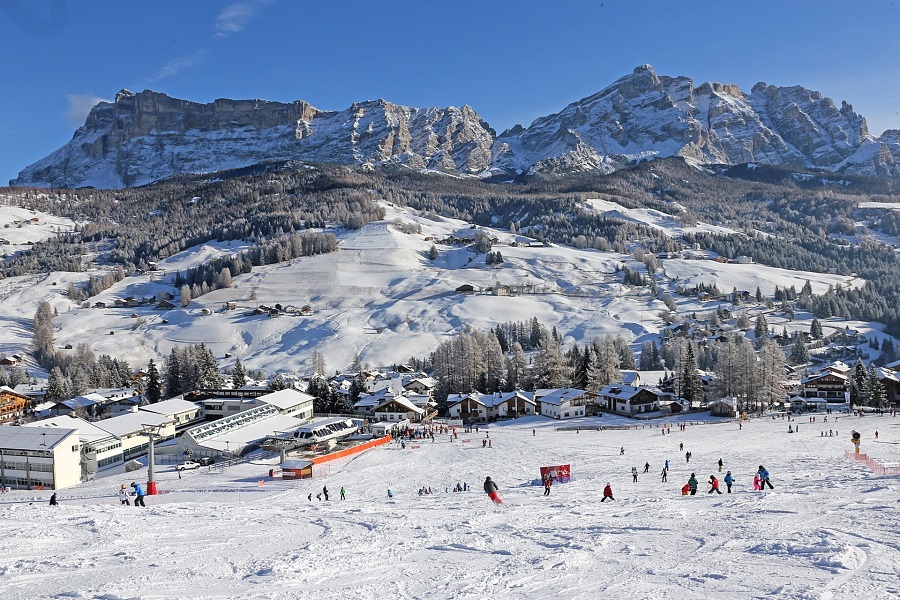
 The La Villa slopes at Alta Badia Ski Resort. Photo: Alta Badia Tourism
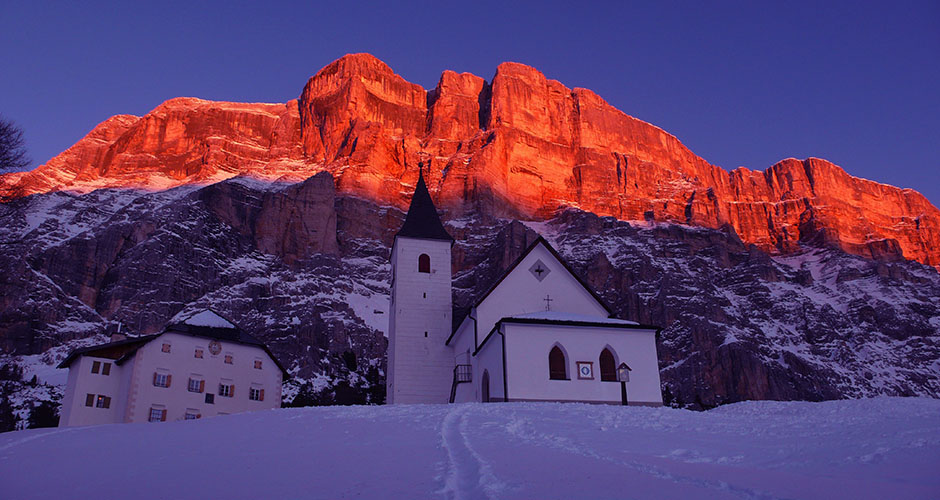 Santa Croce Church in Alta Badia. Photo: Freddy Planinschek
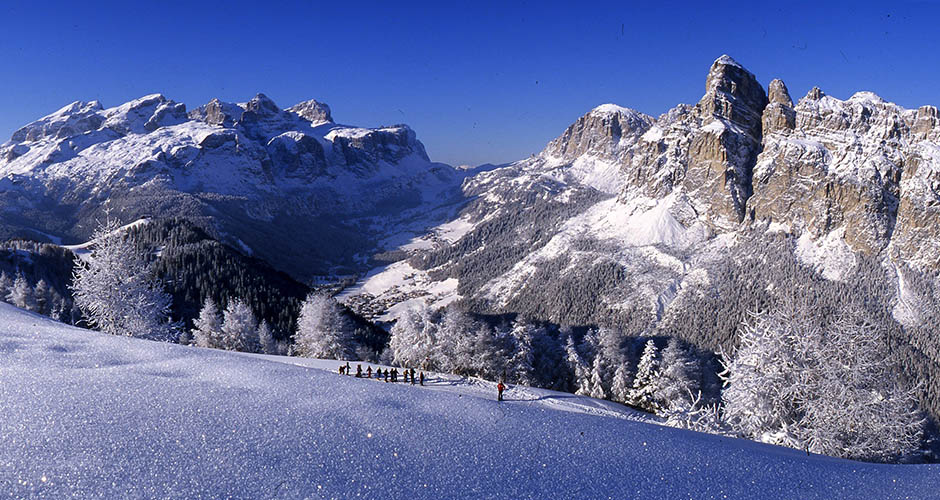 Sassongher. Photo by Freddy Planinschek
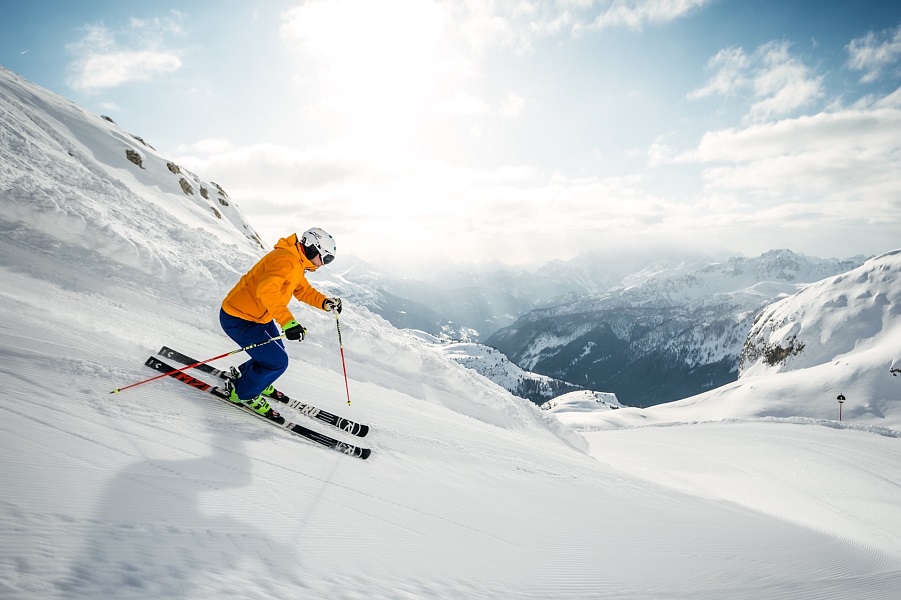 Alta Badia has great slopes for intermediates. Photo: Alta Badia Tourism
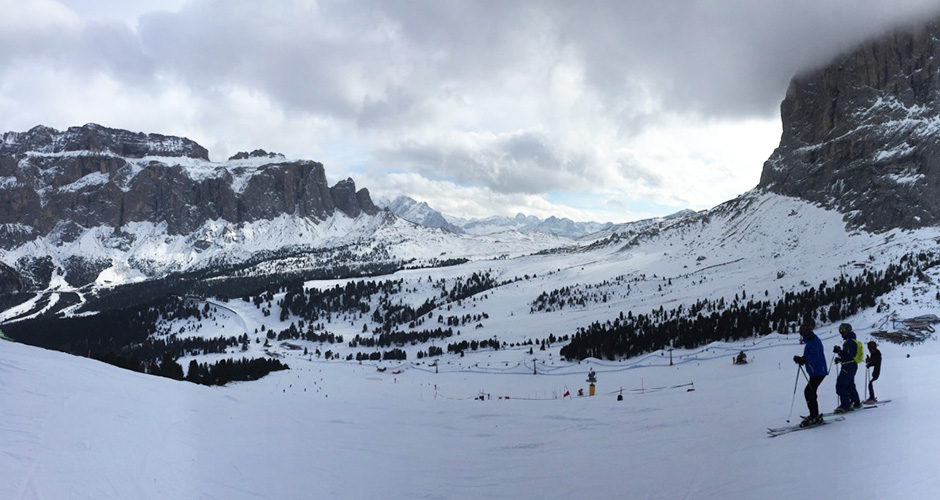 Skiing the Sella Ronda in Alta Badia. Photo by Scout
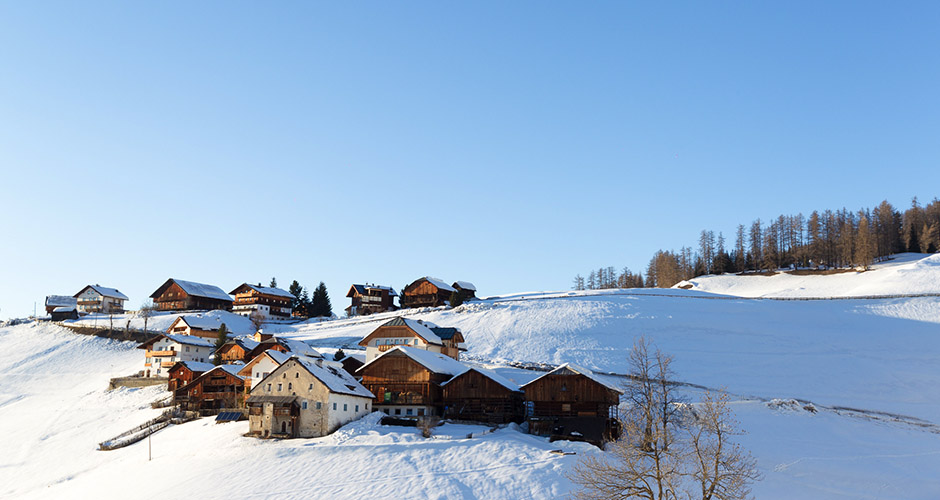 Alta Badia village. Photo by Visual Working
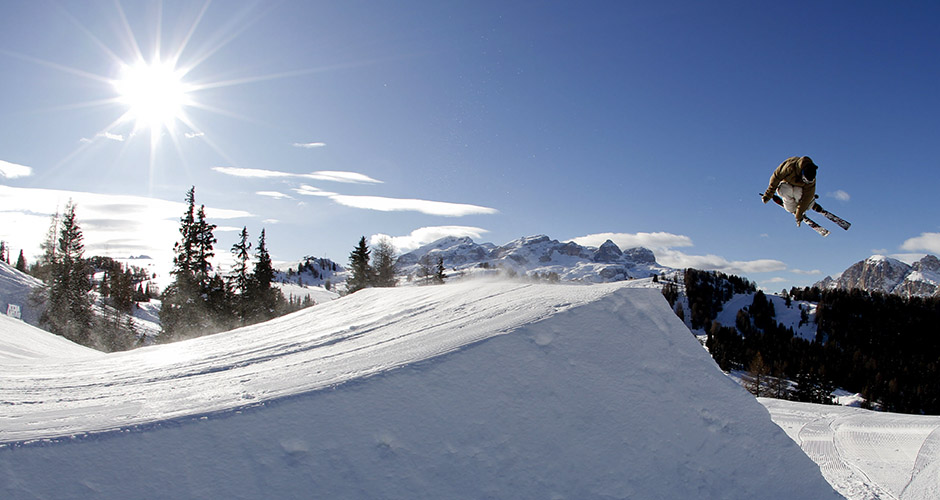 Alta Badia Snowpark. Photo by Freddy Planinschek
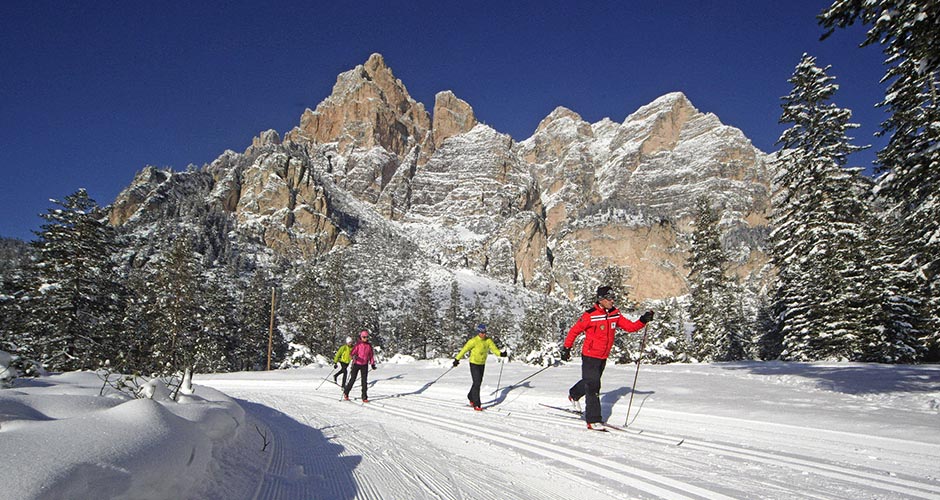 Alta Badia Cross Country skiing by Freddy Planinschek
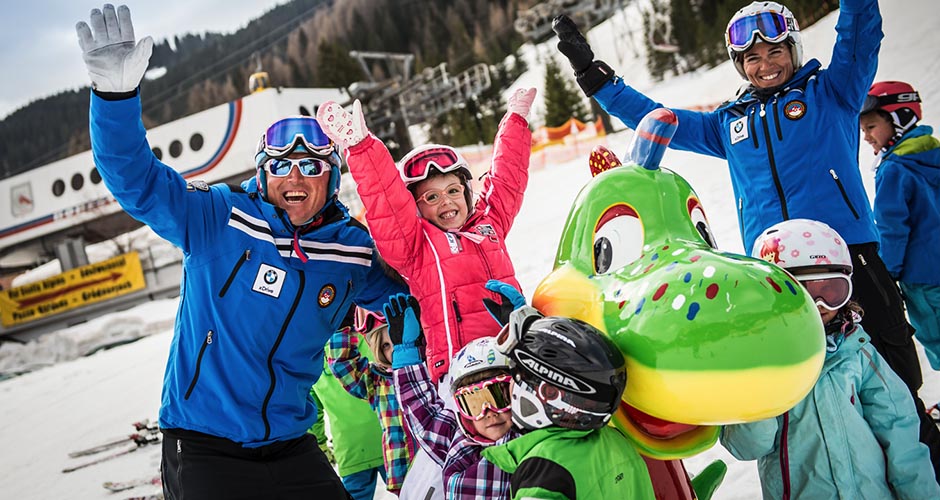 Alta Badia Kids. Photo by Molography.it
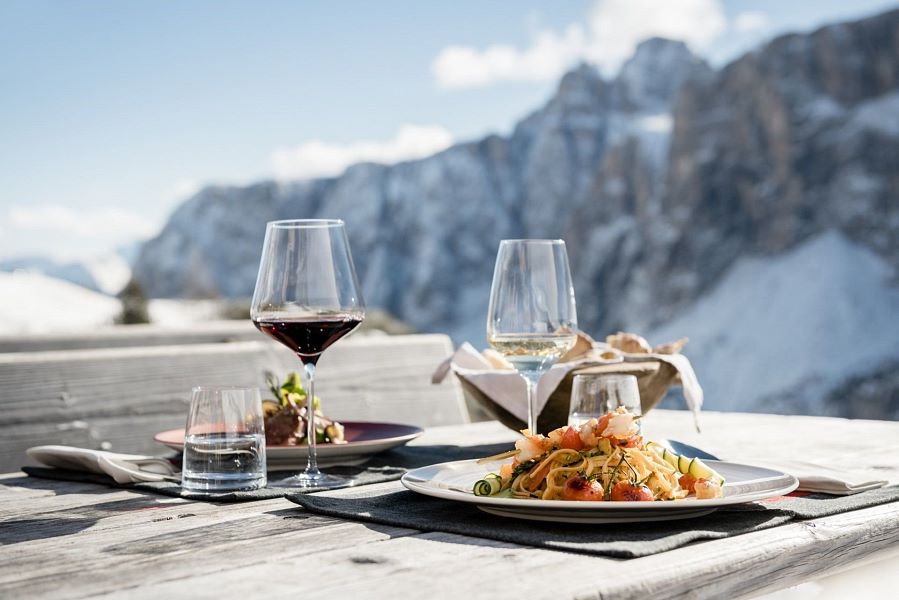 Italian food, wine and skiing. What more could you want? Photo: Alta Badia Tourism
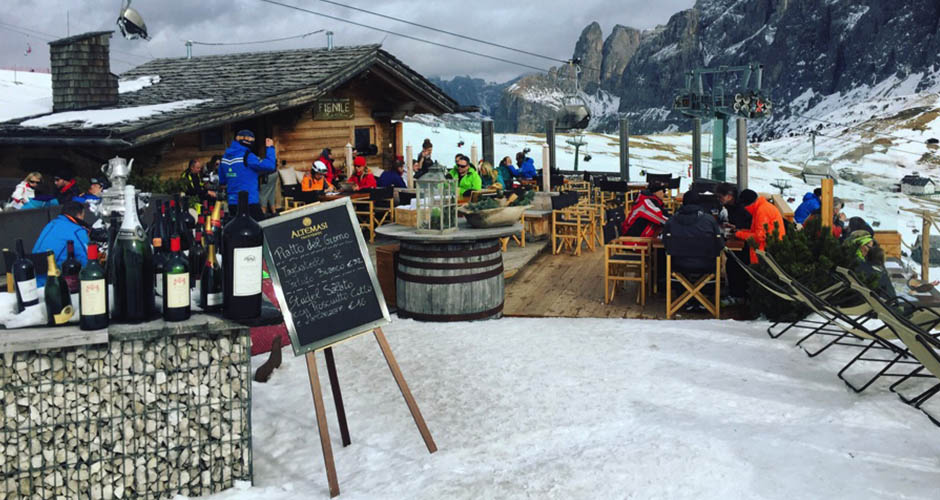 Eating Italian Food and drinking good wine at lunch is all part of the Italian ski experience, such as this restaurant on the Sella Ronda route. Photo: Scout
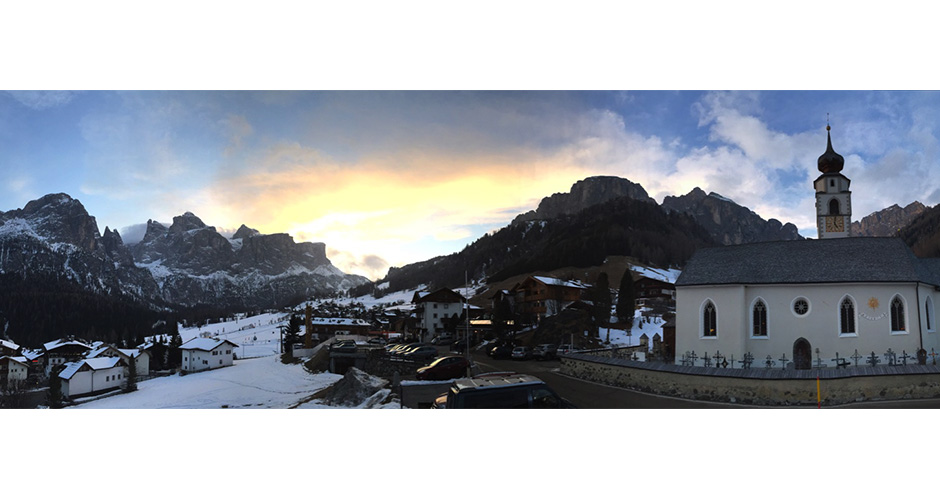 Colfosco village and mountains in Alta Badia. Photo by Scout
Alta Badia is one of the best places to ski in the Dolomites. It has gentle slopes accessible from several villages and is a great base for exploring the Sella Ronda.
Alta Badia
The Alta Badia ski area is a predominantly blue-run, intermediate skiers resort spread over a vast area between the elevations of 1300-2778m (4265-9114ft). Scattered throughout are more quality mountain restaurant huts than anywhere we’ve seen – there are 45 just in the Alta Badia area alone. And with its breathtaking scenery of the Dolomites it’s hard not to stop several times each run just to take in the view. We don’t know anywhere in the world that is a more wonderfully relaxing place to ski than this.
Alta Badia resort does have a few drawbacks. The snowfalls in the Dolomites can be erratic so it’s a good thing they have a vast amount of high-quality snowmaking. There’s also not much in the way of challenging skiing and off-piste is generally banned, but advanced skiers can get their thrills at the connected areas of Arabba and Selva. We actually think it’s a good thing that Alta Badia is so gentle in character because it’s what makes it so unique.
The Sella Ronda
Connected to Alta Badia is the world famous Sella Ronda. Not to be confused as a ski resort, the Sella Ronda is a ski “tour” that circles the Sella massif (a huge limestone formation) and dips in and out of several different resorts; Alta Badia, Arabba, Fassa and Val Gardena. Go clockwise one day and anti-clockwise the next for a completely different experience and different views – and since it’s well signposted and completely on-piste you don’t need a guide. The whole route is 40km and never covers the same run twice. The Sella Ronda is all connected by lifts and ski runs so you don’t ever have to walk or catch a bus (unless you miss the last lift back!). Generally, you want to allow around six hours to take it at a leisurely pace, including a decent pit stop for lunch.
The First World War Tour & Lagazuoi ski tour
Similar to the Sella Ronda – the First World War tour encompasses a variety of resorts but is longer, and involves some transport other than skis and lifts, including a bus and, the best bit, being pulled (on your skis!) by a horse drawn sleigh. This region saw some pretty heavy fighting during World War I and on this tour you will see many artifacts and traces of the war, including barbed wire, trenches, parapet walks and forts. The connection between Cortina d’Ampezzo and Alta Badia involves taking the spectacular Passo Falzarego cable car and the scenic Lagazuoi “Hidden Valley” run. It’s at the base of the run that, for a few Euros, a horse and sleigh will drag you 1.5km back to the lifts at Armentarola. The whole circuit takes 7-8 hours so requires an early start. Most hotels or tourist offices have maps and timetables for the buses. Any of the villages in Alta Badia can be a start and end point for the tour.
Dolomiti Superski Pass
One lift ticket called Dolomiti Superski encompasses the entire Dolomites ski area – that’s 12 ski resorts, 450 lifts and 1200km of slopes. This is the lift ticket to buy if you plan on skiing outside the Alta Badia area, on a tour like the Sella Ronda, First World War tour or just spending a day in another area such as Val Gardena or Cortina. The tickets are not much more expensive than the Alta Badia ticket so worth it for the added flexibility. Plus you can go online at the end of the day to track where you’ve been, kilometers skied and altitude difference. It even gives you a score for the “wellness achieved” though we’re not entirely sure what that means and if that takes into account wine consumption?
Alta Badia makes a great choice for families, particularly those looking for easy slopes because here they are in abundance. There are several ski schools (at least one in each village) and first-timer areas in most villages that don’t require having to go up to the main ski area. Although there are apartments for rent, most of the lodging consists of B&B or half-board hotels so families will want to be comfortable dining in hotel restaurants. Some villages are more spread out than others, so depending on the age and mobility of your children you may want to pick your village and accommodation carefully based on the proximity to the slopes. Ski schools with (non-skiing) day care are located in Colfosco, La Villa and Corvara. The only downfall for families is that there are not a huge amount of non-skiing activities if your kids need entertaining after skiing is done for the day.
Getting to Alta Badia from a major airport on the shuttle bus may not suit families with younger children or those with lots of luggage, so a private shuttle or car rental might be a better way to go.
Alta Badia villages have every type of lodging you could imagine, apart from large chain hotels. Most hotels are small to medium and family-run over several generations. Some of Scout’s favorite ski hotels in the world are here including the charming La Perla in Corvara, beautiful Rosa Alpina in San Cassiano and, for a truly peaceful escape, Ciasa Salares in Armentarola. Not surprisingly, food is the emphasis at many of the hotels so half-board is not necessarily a bad thing. Some hotels have fantastic wellness centers. Let Scout know what your priorities are and we’ll match you with the perfect hotel.
Apart from skiing, enjoying food and wine and wellness centers in hotels, there aren’t a huge amount of other activities in Alta Badia. However they do have:
As for après ski, Corvara has the area’s best bars, including the legendary, not-to-be-missed L’Murin next to La Perla Hotel – it’s like a nightclub in a barn.
A few airports can be used as a gateway to Alta Badia, and while none are super close they’re not that difficult for connecting with Alta Badia. Munich, Innsbruck, Verona, Venice and Milan all have shuttle buses that either go direct to Alta Badia villages, or connect to a bus that does.
If you’re arriving by train the best train station to use is Brunico, 37km to the north of La Villa, as it has the most frequent bus connections to the Alta Badia valley.
There are shuttle buses connecting all of the villages of Alta Badia as well as further to Cortina, Arabba and Val Gardena.
Alta Badia’s ski slopes are open for operation from the end of November until the start of April. Given snowfall is fairly erratic it is hard to say when is the most reliable time, but typically late January and February should be fairly safe for snow. However, since the scenery is the hero here (and sitting out on restaurant terraces is so enjoyable), this is one place where you want to pray for fine weather and sunshine more so than snowfall.
